1643 broadway · bushwick, brooklyn · est. 1888
1643 broadway · est. 1888
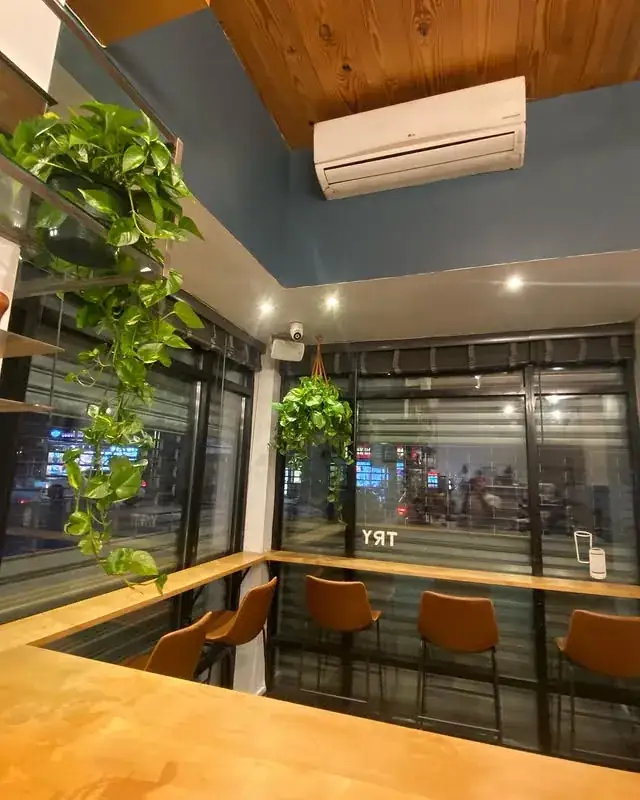
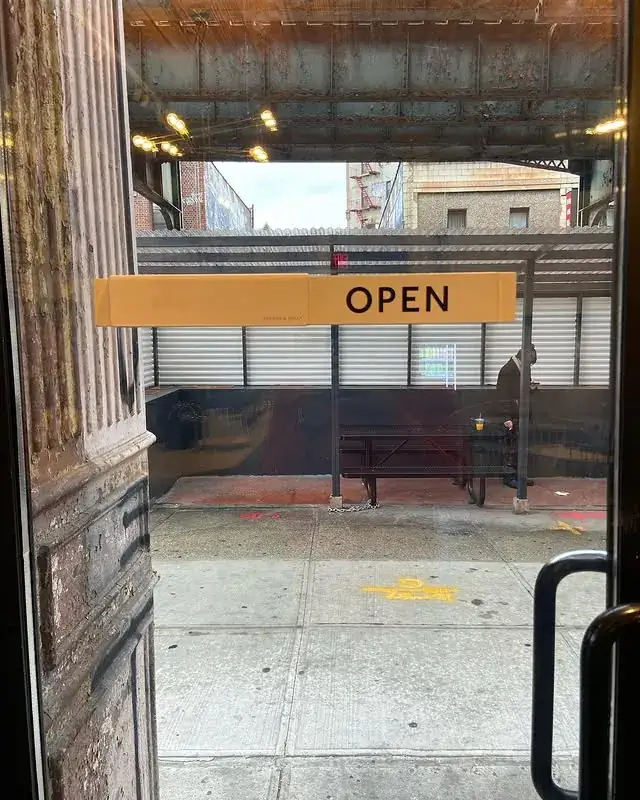
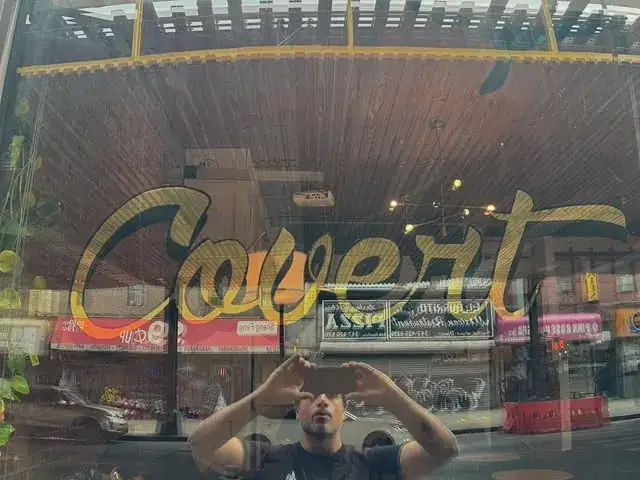
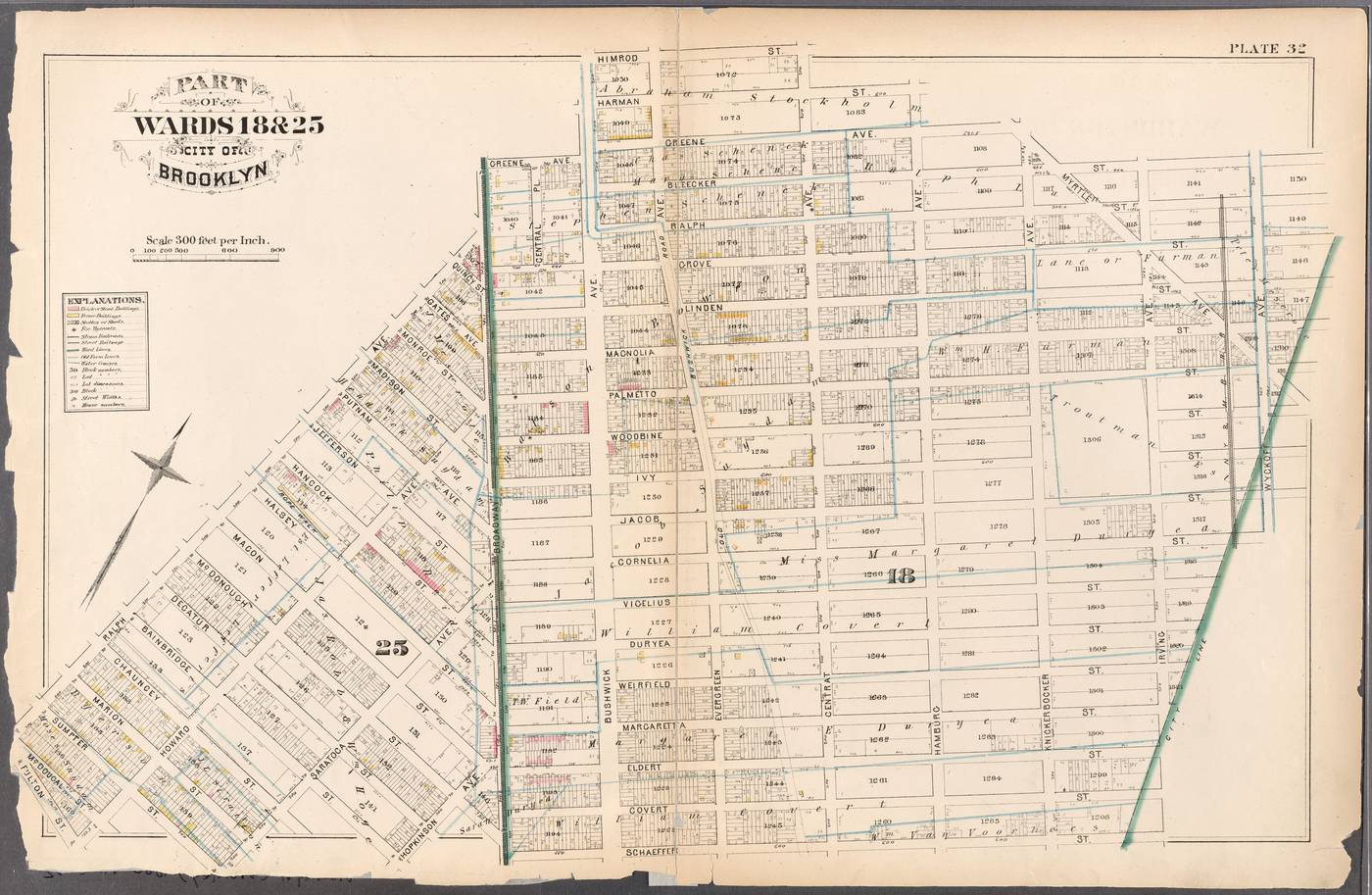
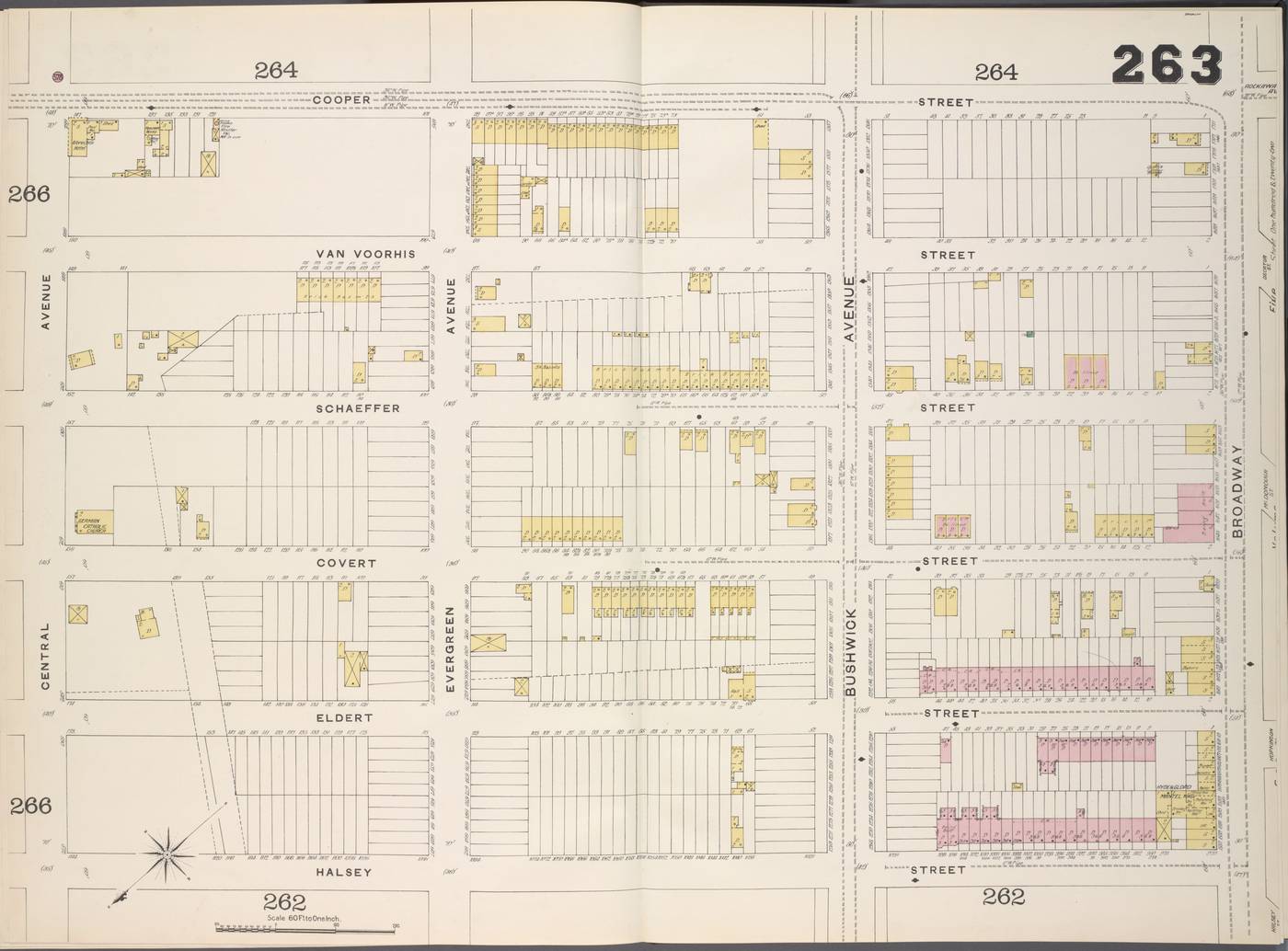
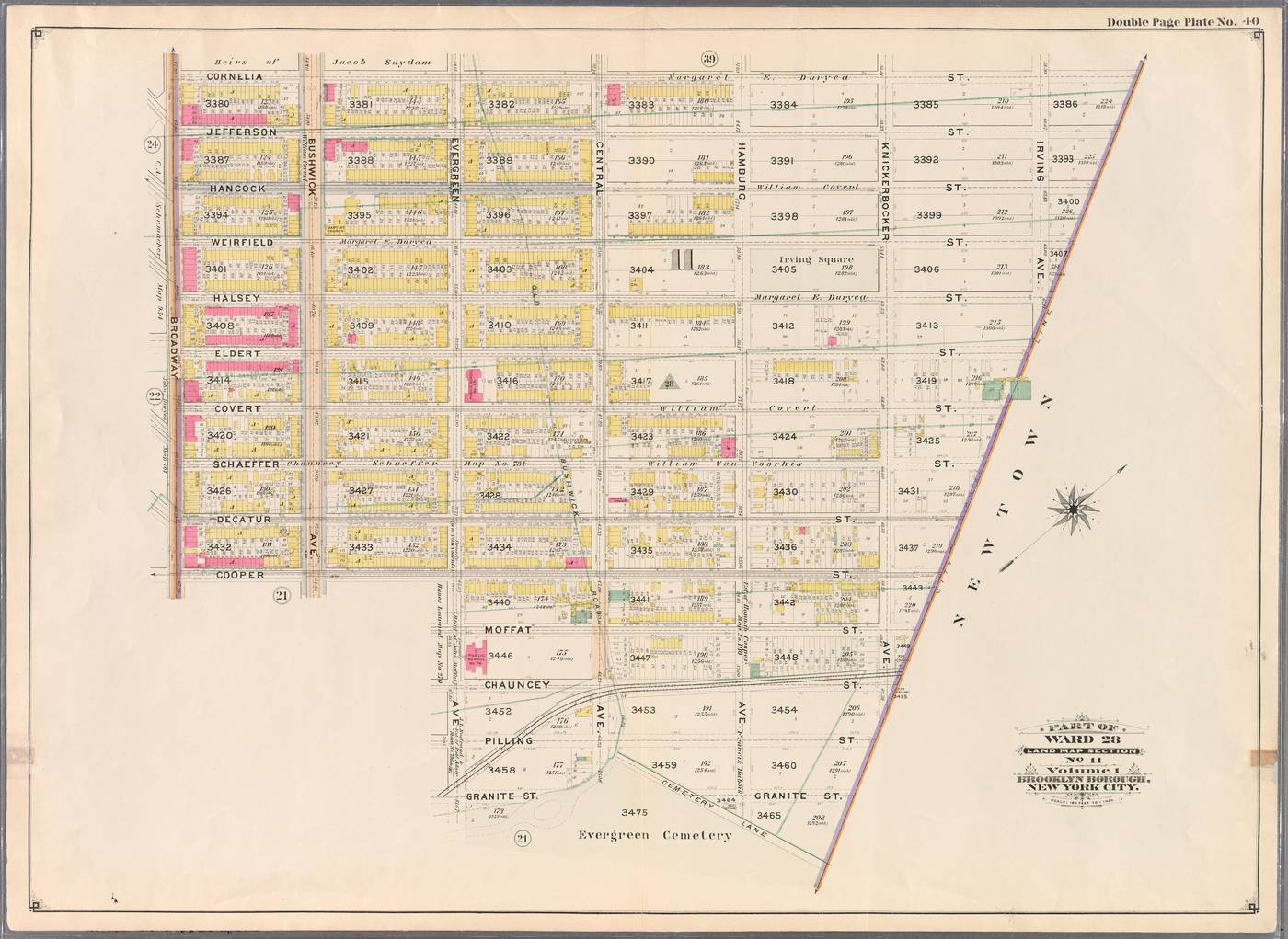
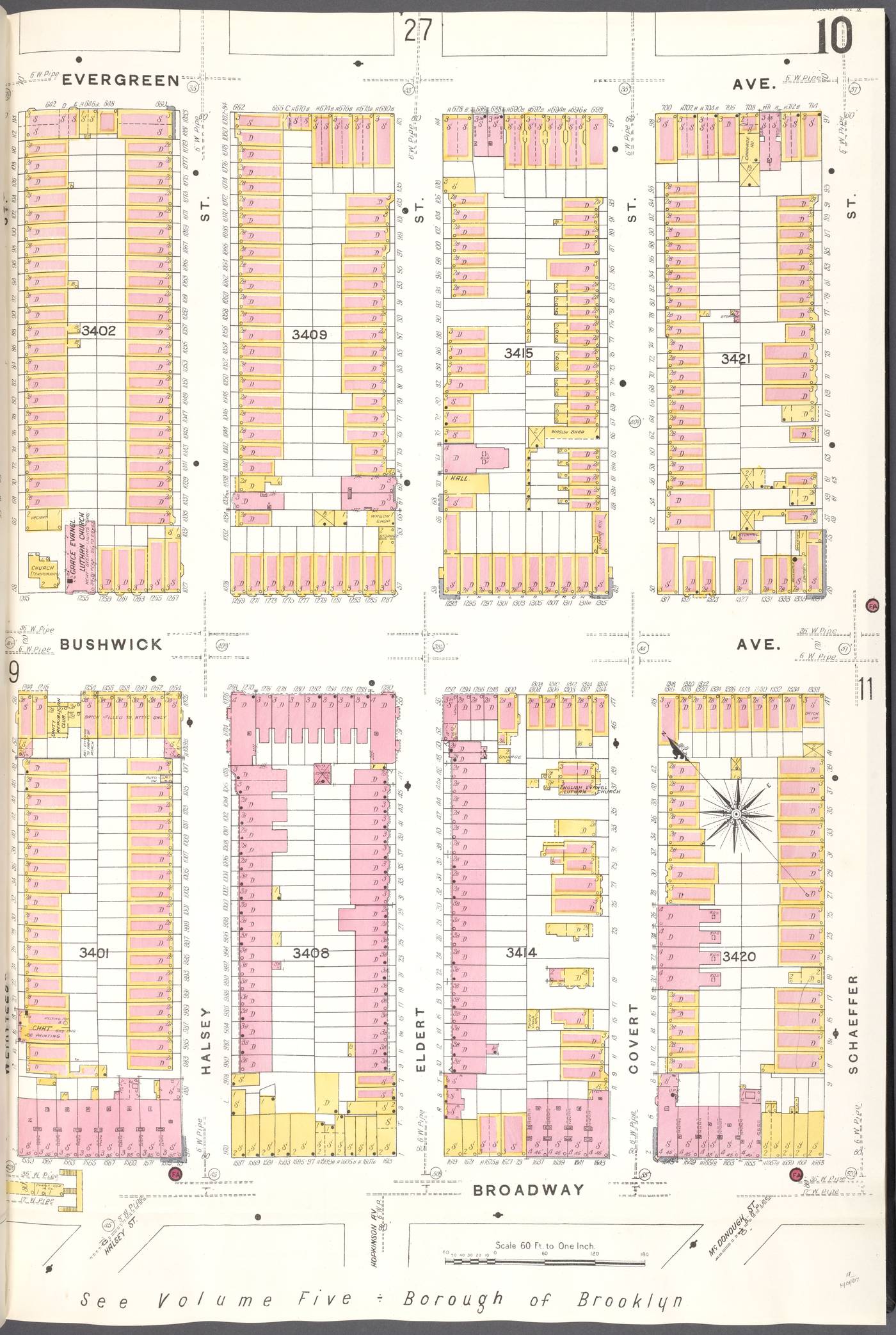
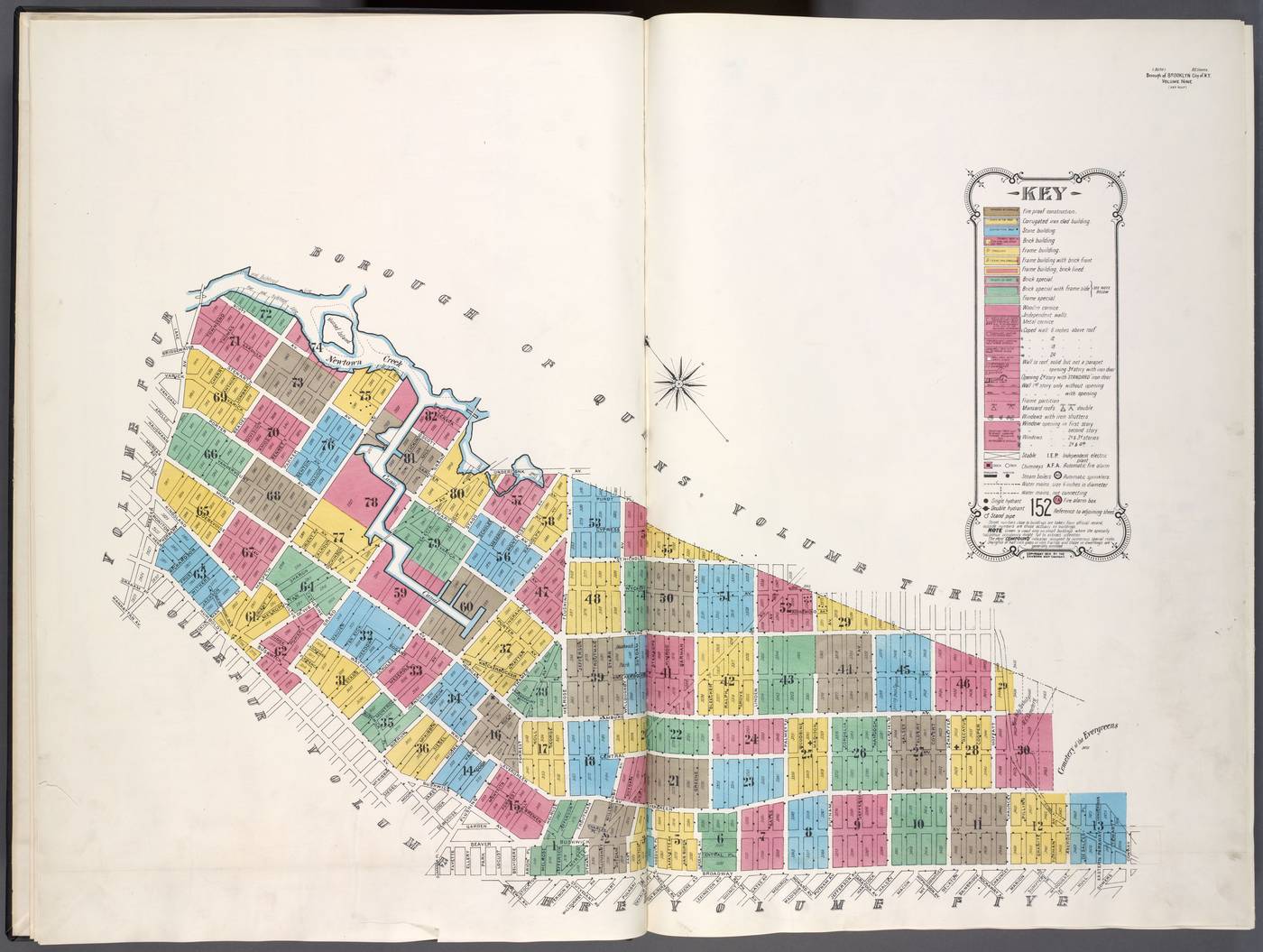
The neighborhoods surrounding Covert Coffee are as unique and interesting as any in New York City. Newspapers and fire insurance maps meticulously archived and made available by Brooklyn Public Library offer insight as to what it must have been like here, if you were to visit Covert Coffee during the 1880s.
A couple blocks up at Covert and Evergreen was Roth farm, where neighbors would fetch well-water for their houses and local kids would stash scrap wood for bonfires. Four blocks further laid the city line at Irving Ave. There was Ol' Fink's Pond on Central Ave and Schafer Street, which served the neighborhood as a swimming hole (bare) in Summer and skating pond in Winter.
The neighborhoods surrounding Covert Coffee are as unique and interesting as any in New York City. Newspapers and fire insurance maps meticulously archived and made available by Brooklyn Public Library offer insight as to what it must have been like here, if you were to visit Covert Coffee during the 1880s.
A couple blocks up at Covert and Evergreen was Roth farm, where neighbors would fetch well-water for their houses and local kids would stash scrap wood for bonfires. Four blocks further laid the city line at Irving Ave. There was Ol' Fink's Pond on Central Ave and Schafer Street, which served the neighborhood as a swimming hole (bare) in Summer and skating pond in Winter.
Edgar A. Steup · Brooklyn Daily Eagle, Jan 21, 1940 · Page 48There were picnic grounds at Broadway and Chauncey Street. The circus pitched tents at Saratoga Park, which was lit by gas lamps. Broadway was paved with cobblestone and, at Christmastime, prettily decorated with Yuletide green amongst attractive storefront displays. Streetcars were pulled along train tracks in the middle of the road by horses.
Near Myrtle Ave and Broadway kids would gather flowers in the Spring and Summer, and fruit from the orchards in the Fall. In the Winter, they coasted down its snow-covered slopes. They would play baseball games in empty fields which had yet to become roads; they would build fires and roast spuds — sweet cliners, yams, to you.
They would steal rides on the train to Canarsie. There was a little boy who used to sell homemade ice cream candy for a penny a stick on the Canarsie trains — remember the lil' feller?
W. Burguin · Brooklyn Daily Eagle, Nov 20, 1938 · Page 42Brooklyn Daily Eagle, Jun 24, 1951 · Page 34"When all were in place we set fire to them. And was that a blaze — it even awakened Red, the cop, who tried to chase the entire neighborhood away from it. There were no buildings near enough in danger of getting afire. We voted it a grand success."
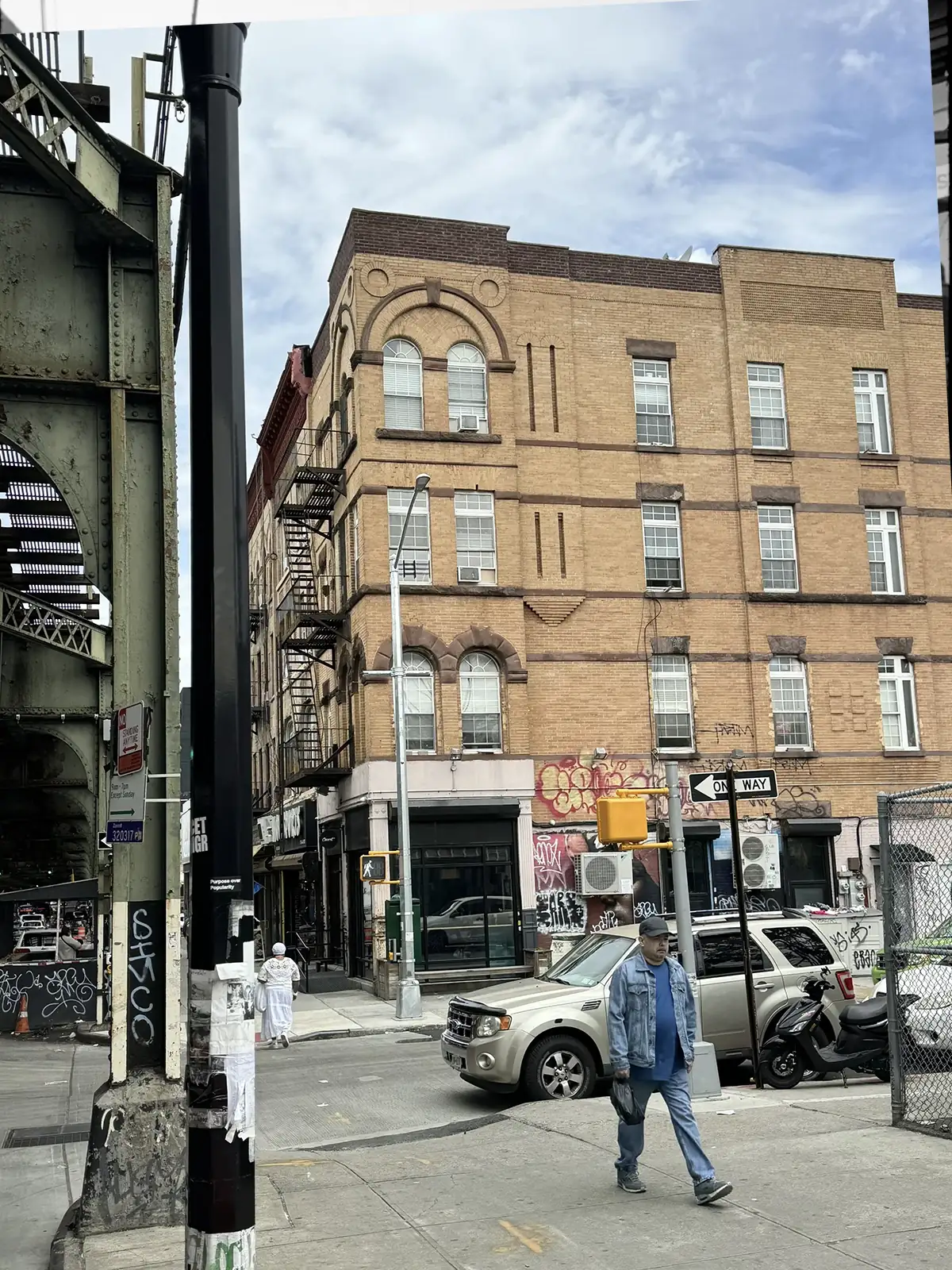
Chauncey Street and Halsey Street elevated train stations opened in the summer of 1885. Bushwick was changing in what must have seemed like an instant. Some time during 1888–1889, on what was once a farm owned by William Covert, an ornate four-story brick building was constructed at 1643 Broadway — which still stands today, housing Covert Coffee.
The address first appears listed for sale in 1901 — described as "a 4 story double flat and store." An identical building was built next door, the corner lot presumed occupied.
Brooklyn Daily Eagle, Fri Jan 18, 1901 · Page 12First of all businesses to utilize the corner retail space at 1643 Broadway was H.C. Bohack Co., Grocers. Henry C. Bohack immigrated to Brooklyn from a small seaport, Cuxhaven, Germany at the age of 17. He worked as a grocery store clerk for $15 per month, before opening his first store at Lorimer Street & Broadway on May 25, 1889. He married his wife the day after the store opened — above which they lived.
By the year 1903, the corner of Covert Street and Broadway was one of ten completely equipped modern stores marketed as Brooklyn's quality grocer — and advertised coffee often:
The Chat, 12 Mar. 1910, p. 4 — adjusted for inflation: $36.28 and $7.89 respectively."Paramount Blend Coffee. Perfection in quality; perfect aroma; cannot be equalled anywhere for this price. 5 lbs. for $1.15; per lb. 25¢."
"Special Blend Coffee. A direct importation — the most desired coffee with that delicious mellow flavor to delight the most particular lover of good coffee. 5 lbs. for $1.60."
Mr. & Mrs. Bohack became prominent Brooklynites, well known in the 18th and 25th wards. On Friday August 18, 1893, after a fire on Cooper Street burned 17 houses and rendered 25 families homeless, groceries were provided free of charge by H.C. Bohack.
On Thursday November 21, 1901, after Mr. & Mrs. Bohack returned to Brooklyn from an eight-month trip in Europe, a surprise party was organized — a full band serenaded the couple outside their home at the corner of Broadway and Putnam, before they were brought to Stanwix Hall, where two hundred employees and business associates waited. Dancing was afterward indulged and a genuine German supper was enjoyed.
H.C. Bohack Co. continued its successful expansion throughout the city during the first half of the 20th century. While the location at Covert Street & Broadway did not last long, the Bohack brand survived until 1977, even being featured in the 66th episode of The Sopranos on HBO.
The address first appears in newspaper advertisements as one of five locations of Jay Pee Flower Markets during 1926. The flower market advertised a location at this address for two years.
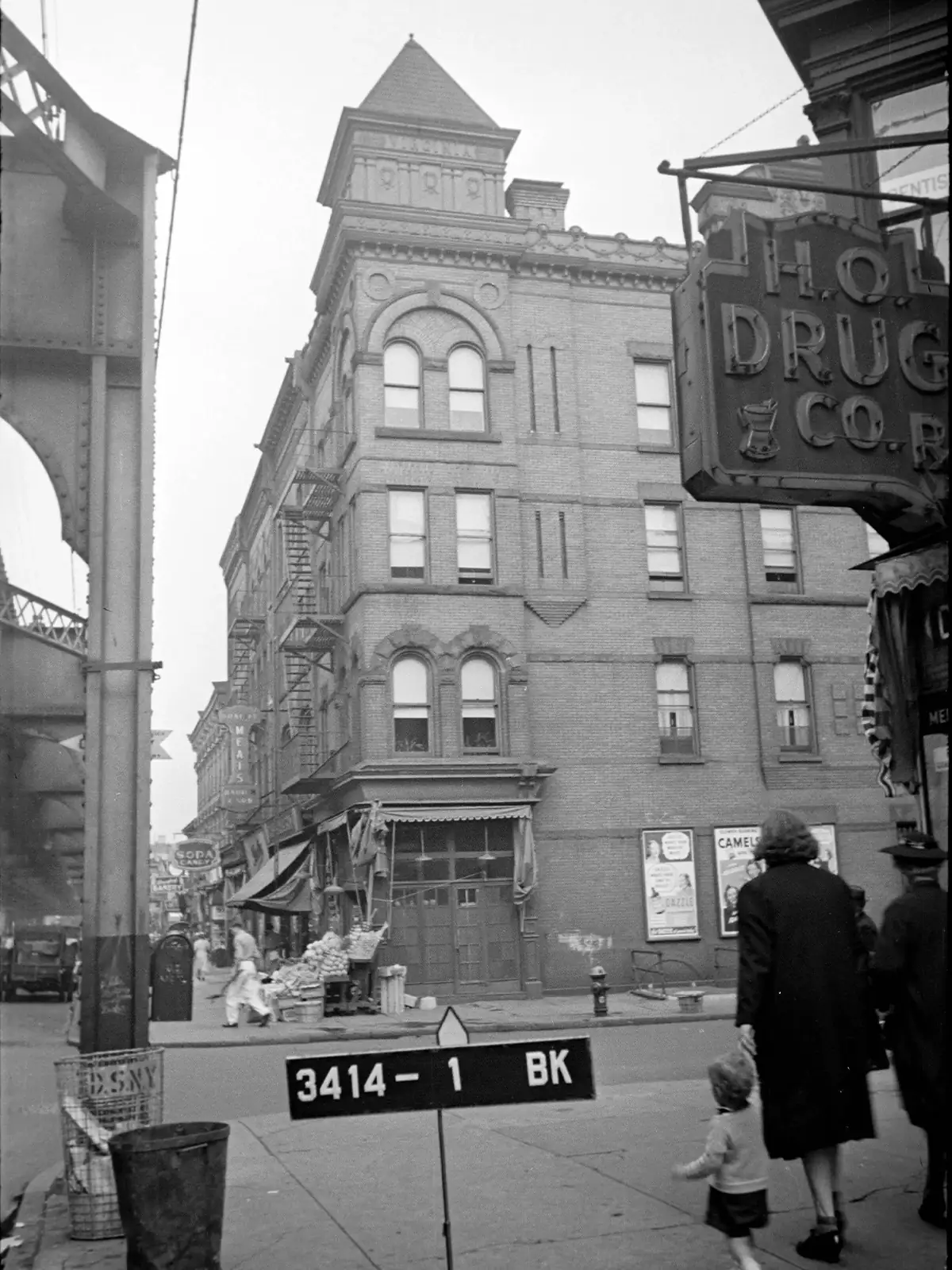
Thu, Apr 01, 1926 · Brooklyn Daily Eagle · Page 17Starting around 1928, the corner unit was home of a fruit and vegetable market. A help-wanted listing read: "Christian young man as clerk in fruit and vegetable market, salary $15. Duley, 1643 Broadway." In a photograph taken in the 1940s — the first known photograph of the building — the market is open for business.
The Chat, Saturday Jun 30, 1928 · p. 34Proprietor Mr. W.J. O'Shaughnessy started H.O. Drug Co. in the early 1900s and built it into an institution in the neighborhood. Everyone would go there for all kinds of medicine and drug store supplies. Customers went out of their way in the Bushwick section to trade at the H-O Drug Store. They stocked all sorts of medical supplies and novelties, and advertised delivery by automobile as a new and innovative service.
Home to a real estate office, Bushwick Realty Co., during 1923.
By Saturday July 1, 1950, another business had come and was on its way out in an unfortunate hurry: "Luncheonette-Custard Store; corner location; quick sale account of sickness. 1643 Broadway."
Sat, Jul 01, 1950 · Page 10In 1957, another grocery store had taken up shop, with The Williamsburg News reporting notice of a license to sell beer at retail at 1643 Broadway, Brooklyn, Kings County.
During the following two decades, the neighborhood north of Covert Coffee, the 28th precinct, had devolved into as much a neighborhood of rats, stray dogs, and burned-out buildings as it was of people — "a part of Brooklyn that few people see anymore, a battleground for the police and young street criminals."
NBC News, 1976Young men would set fire to vacant buildings for fun in the "Burning Bush," as it was called by local gangs — the Devil's Rebels, Latin Tops, Savage Skulls, Tomahawks, Jolly Stompers, and Black Pearls.
The 1980s were rock bottom for the Broadway-Bushwick corridor. This block was not unique, with each building entirely boarded up, lying vacant if not being used as a shooting gallery. Drug use and crime were constant — everything from petty theft to gruesome murders happening along the elevated tracks.
Rental units have always occupied the space above Covert Coffee, while rent prices have fluctuated dramatically:
August 19, 1916: "Six rooms and bath, rent $17. 1643 Broadway, apply on premises." — Adjusted for inflation, equal to $487.12 as of March 2024.
December 11, 1926: "4 and 5 rooms, $20 and $25. 1643 Broadway." — Adjusted for inflation equal to $359.00 and $448.75.
During 1909, a 12-year-old boy named Frank Bundy living at 3 Covert Street was charged with robbery. "Patrolman Russel pressed a charge of robbery against Frank Bundy. The lad was held for examination. According to Officer Russel, the youngster held up William Eagleston and George Payed, two small boys from Ridgewood, and robbed them of eleven cents and a penknife."
A cool burglar — Times Union, Tue, Oct 30, 1894 — made an appearance at these addresses as well, adding to the neighborhood lore that stretches across more than a century of Brooklyn life.